
Event Marketing
How Much Should You Spend Advertising an Event?
There's no universal event ad budget. Here's how to size yours from capacity, ticket economics, your existing audience and the time left to sell.
· 10 min read
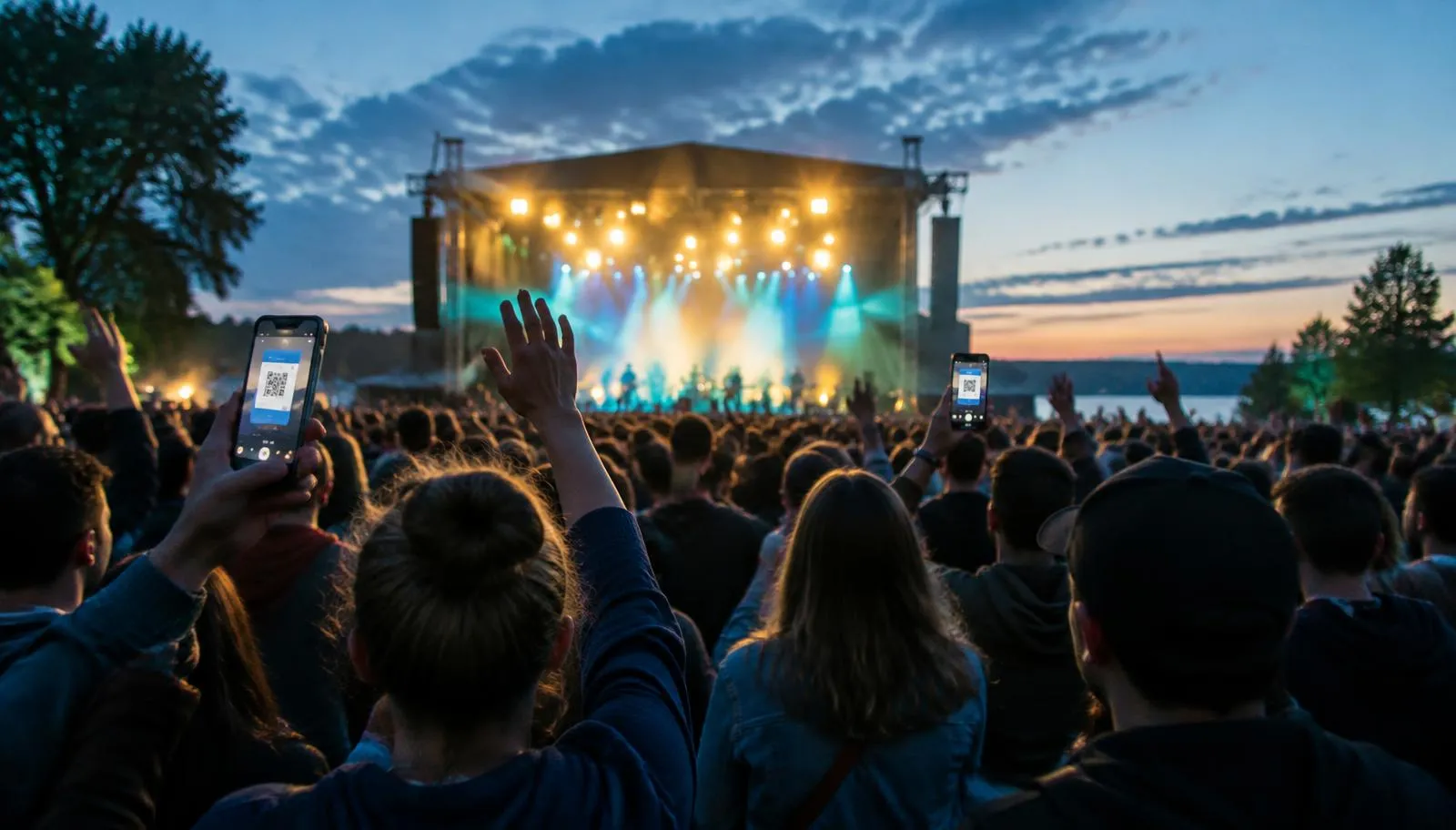
There is no universal event advertising budget. The right amount comes from how many tickets you need to sell through paid ads, what each ticket is worth to you, and how much time you have left to sell them. A sold-out headliner with a big email list may need very little paid media. A first-year festival in a new city may need a lot more, and it may need it earlier.
The practical way to set the number is to work backward: start with capacity and revenue, subtract what your existing audience will likely buy on its own, and then decide how much you can afford to spend to sell the remaining tickets. The rest of this guide walks through that process, the factors that move the number up or down, and how to tell whether your spend is working.
Event Marketing Budget vs. Paid Ad Spend
Before you set a number, separate two things that often get lumped together.
- Event marketing budget: everything you spend to promote the event. That can include creative production, photography and video, design, influencer or artist content, printed materials, PR, email and SMS tools, agency or freelancer fees and paid advertising.
- Paid ad spend: the money that goes directly to platforms such as Meta (Facebook and Instagram) and Google to show your ads.
Mixing these up causes problems. If you plan a $20,000 "marketing budget" and $8,000 of it goes to video production and management fees, you have $12,000 of actual media, not $20,000. When you compare quotes from agencies or plan your season, keep fees and ad spend on separate lines.
What Determines an Event Advertising Budget?
Every event is different, but these are the factors that matter most:
- Venue capacity: how many tickets exist to sell
- Ticket price and revenue potential: what each sale is worth, including VIP, tables, bottle service, parking or merchandise
- City and market: how crowded the local events calendar is and how expensive attention is there
- Event type: a recurring club night, a one-off concert, a multi-day festival or a conference all sell differently
- Artist or brand awareness: a known name creates demand; an unknown one has to build it
- Existing audience: past buyers, social followers and your email and SMS list
- Tickets left to sell: the gap between what's sold and your target
- Time remaining: a long runway lets you build demand; a short one forces you to buy it
- Competition: other events targeting the same people on the same dates
- Organic reach: how much the artist, venue and partners will promote for free
- Historical sales: what happened at past editions or similar shows
- Creative quality: strong video and clear offers usually make every dollar work harder
- Ticket-sales pace: whether you're ahead of or behind where you should be
You won't have perfect data on all of these, and that's fine. The goal is to make a reasonable starting estimate and then adjust it based on what actually happens.
How Venue Capacity Should Affect Your Budget
Capacity sets the ceiling. A simple way to use it:
- Start with total sellable capacity. Remove comps, guest list and holds.
- Estimate what your existing audience will buy. Look at how past events sold to email, SMS, followers and repeat buyers before ads did much.
- Estimate partner and organic sales. Artist posts, venue lists, promoters and sponsors.
- What's left is the paid-media gap. That's the number of tickets your ads realistically need to help sell.
A 300-person room with a loyal following may have a small gap. A 5,000-person outdoor show in its first year might have a large one. The budget should follow the gap, not the size of the venue alone.
How Ticket Price Affects Advertising Economics
Ticket price determines how much you can afford to spend to sell one ticket. The question to answer is: what is the most you can spend to acquire a ticket buyer and still hit your financial goal?
Work out your contribution per ticket: ticket revenue after fees and taxes, plus any reliable add-on revenue per attendee (bar, VIP upgrades, merchandise), minus the variable costs that come with each extra guest. Then decide how much of that you're willing to put toward acquisition.
A $25 general admission ticket leaves very little room. A $150 VIP package leaves more. That's why many promoters push ads harder toward higher-value tiers or group packages, where the economics are more forgiving.
Also remember that one purchase often includes more than one ticket. If your average order contains two or three tickets, your affordable cost per order is higher than your affordable cost per ticket.
How Far in Advance Should You Start Spending?
It depends on the event, but the general principle is that larger, more expensive and travel-dependent events need a longer runway. A local Friday night event might sell most of its tickets in the final week or two. A destination festival may need months, because people have to plan travel and time off.
Starting at the right time matters for budget because demand built early is usually cheaper than demand bought in a panic at the end. The practical takeaway: plan your on-sale date, your announcement and your final push before you spend anything, so the budget has a timeline to follow.
Meta Ads for Events
For most ticketed events, Meta (Facebook and Instagram) is usually central to the paid plan, because event discovery is visual and social. People often don't know a specific event exists until they see it.
Meta works well for:
- Announcements and lineup reveals using short video and strong visuals
- Reaching people by location and interests around your market
- Retargeting people who visited your ticket page, watched your videos or engaged with your profiles
- Last-minute urgency messages in the final days
Meta's delivery system uses an ad auction that considers your bid, estimated action rates and ad quality, so better creative and accurate conversion data can make your budget go further. New campaigns also go through a learning phase while the system gathers results, which is one reason constant edits and tiny budgets can hold performance back.
If your ticketing platform supports the Meta Pixel or the Conversions API, set it up before launch so Meta can optimize toward purchases instead of clicks. Many of the same principles apply to restaurants; our guide to Facebook ads for restaurants covers the funnel in more detail.
Google Ads for Events
Google Search captures people who are already looking. For events, that typically means:
- Searches for the artist, festival or event name plus "tickets"
- Searches for things to do in your city on a specific weekend
- Searches for your venue
Search usually isn't the main driver for an unknown event, because people can't search for something they haven't heard of. But once awareness exists, branded search can protect your sales from resellers and competitors bidding on your name. Google's ad auction and location targeting work differently from Meta's, so treat them as separate plans with separate goals.
Retargeting Event Ticket Buyers
Retargeting is often one of the most efficient parts of an event budget. The people who visited the ticket page, started checkout or watched most of your video are much closer to buying than a cold audience.
Common retargeting audiences:
- Ticket page visitors who didn't buy
- People who started checkout
- Video viewers and social engagers
- Past attendees (where you have permission and the platform allows it)
Exclude people who already bought, or at least show them different messaging (upgrades, add-ons, "bring a friend"). Paying to show "Get tickets" ads to existing ticket holders is a common and avoidable waste.
How to Allocate Budget During an Event Sales Cycle
There's no fixed split, but a typical sales cycle follows a pattern. The table below is a hypothetical framework, not an industry benchmark. Use it to think through phases, then adjust it to your own sales data.
| Phase | Main goal | Where spend usually goes |
|---|---|---|
| Announcement | Awareness and early buyers | Video, lineup reveal, broad local reach |
| Early sales | Lock in fans and price-tier buyers | Interest targeting, lookalikes, email/SMS |
| Mid-campaign | Keep momentum | Fresh creative, artist content, testing |
| Final 30 days | Convert interest | Retargeting grows, urgency messaging |
| Final 7 days | Close the gap | Heavier retargeting, last-call creative |
Many events find that a large share of sales happens near the end. That doesn't mean you should hold all the budget for the final week; the late surge often depends on awareness you built earlier.
When to Increase Ad Spend
Consider spending more when:
- Cost per purchase is comfortably below your affordable cost and sales are steady
- Sales pace is strong and you have inventory left to sell
- A new trigger exists: lineup addition, price increase deadline, set times released
- Retargeting audiences are growing and converting well
Increase gradually rather than doubling overnight, and watch whether the cost per purchase holds.
When NOT to Increase Ad Spend
More money won't fix every problem. Hold off when:
- The ticket page is converting poorly. Fix the checkout, mobile experience, pricing clarity or load speed first.
- Tracking is broken. If you can't see purchases, you can't tell whether more spend is working.
- Creative is tired. Frequency is rising and results are falling. New creative will usually help more than more budget.
- The offer is the problem. If the price or lineup doesn't match the market, ads will only show that to more people.
- You're near capacity. Don't keep spending to sell tickets you don't have.
Signs Your Event Advertising Budget Is Being Wasted
- You're optimizing for clicks or link clicks, not purchases
- Existing ticket buyers keep seeing "buy now" ads
- The same one or two ads run for the entire campaign
- Targeting is far wider than the realistic travel radius
- Nobody can tell you how many purchases came from ads
- Spend goes up but daily ticket sales don't move
- Ads lead to a homepage instead of the ticket page
How to Measure Event Advertising Performance
Focus on business outcomes first and platform metrics second.
Outcome metrics:
- Tickets sold and revenue, overall and by tier
- Cost per purchase and cost per ticket
- Sales pace versus your target
- Revenue from ads versus ad spend
Diagnostic metrics:
- Ticket page conversion rate
- Checkout abandonment
- Click-through rate and cost per landing page view
- Frequency and creative fatigue
Use UTM parameters on every link so your ticketing or analytics platform can show which campaigns drove sales. Keep in mind that platform-reported conversions and your ticketing data rarely match exactly. Ads also influence people who later buy through another route, and some sales would have happened anyway. Look at both, and treat platform attribution as useful evidence rather than the full truth.
Event Advertising Budget Examples
The following are hypothetical examples to show the reasoning. They are not benchmarks, and the numbers are made up for illustration.
Hypothetical example 1: 400-capacity club night, recurring monthly
- Capacity after comps: 380
- Strong email/SMS list and repeat crowd; past events sold roughly half organically
- Paid gap: about 190 tickets
- Ticket price: $30; the organizer decides they can spend up to $8 to sell a ticket
- Maximum paid budget for the gap: about $1,520, spent mostly in the final two weeks with retargeting running throughout
Hypothetical example 2: 3,000-capacity first-year festival
- Capacity after comps: 2,850
- No historical data; small social following
- Paid gap: most of the inventory
- Average order value: $180 (two tickets per order)
- The organizer sets an affordable cost per order and plans a longer runway with an announcement phase, mid-campaign testing and a heavy final push
In both cases, the budget follows the paid gap and the economics of each ticket, and it gets adjusted weekly based on actual sales pace.
FAQ
How much should I spend on advertising for an event?
Enough to sell the tickets your existing audience won't buy on its own, at a cost per ticket that still leaves you profitable. Work out the paid gap and your affordable cost per ticket, then multiply. Adjust as real results come in.
Is there a standard percentage of event revenue to spend on ads?
You'll see percentages quoted online, but there's no verified standard that applies across event types and markets. A percentage ignores your audience, timing and ticket economics. Use it as a sanity check at most.
Should I spend more on Facebook or Google for an event?
For most ticketed events, Meta does more of the work because it creates discovery. Google Search is useful once people know the event exists and search for it by name. Many events use both, with Meta carrying more of the budget.
When should I spend the most?
Typically, spend builds toward the end of the sales cycle, especially on retargeting. But the late push works better when you've built awareness earlier.
What if ticket sales are behind?
Check the ticket page, tracking, creative and offer before adding budget. If those are sound, shift spend toward retargeting and the audiences with the lowest cost per purchase.
The Bottom Line
An event advertising budget should come from your capacity, your ticket economics, your existing audience and your timeline, not from a generic percentage. Know your paid gap, set an affordable cost per ticket, separate fees from ad spend and review sales pace every week.
Mixtarget works with event and entertainment brands on paid social, Google Ads, retargeting and ticket-sales strategy. You can see examples of our event work or compare our plans and pricing. If you want a second opinion on your current event budget, a free audit is a simple place to start.
Related insights
Restaurant Marketing
Facebook Ads for Restaurants: How to Turn Clicks Into Reservations
Cheap clicks don't fill tables. Learn how to build Meta campaigns that take nearby diners from scrolling to booking, and how to tell whether they're working.
· 11 min read
Read article
Restaurant Marketing
How Much Should a Restaurant Spend on Marketing?
Percent-of-revenue rules don't tell you what to spend or where. Here's how to size a restaurant marketing budget around covers, capacity and what a guest is actually worth.
· 11 min read
Read article