
Restaurant Marketing
Facebook Ads for Restaurants: How to Turn Clicks Into Reservations
Cheap clicks don't fill tables. Learn how to build Meta campaigns that take nearby diners from scrolling to booking, and how to tell whether they're working.
· 11 min read
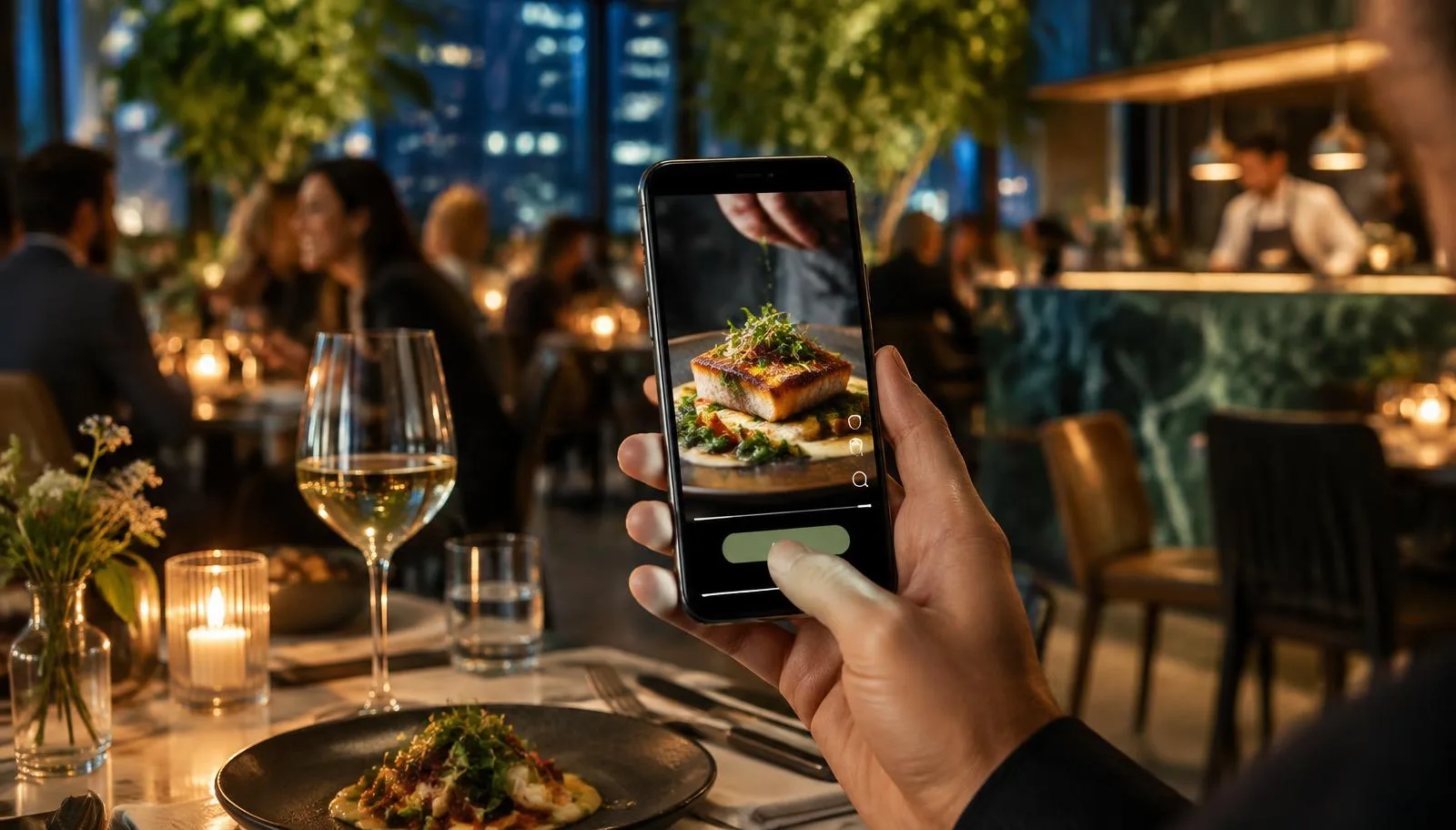
Cheap clicks aren't the goal of Facebook ads for restaurants. Covers are. A restaurant ad only does its job if it moves people through the full path:
Attention → Click → Menu or reservation page → Reservation → Visit → Repeat visit
Most restaurant campaigns that "don't work" fall apart somewhere along that path: the ad gets attention but the page is slow, the reservation button is hard to find, nobody follows up with people who almost booked, or nobody tracks what happened after the click. This guide covers how to set up Meta advertising (Facebook and Instagram) so each step leads to the next.
Do Facebook Ads Work for Restaurants?
They can. They work best when the restaurant already delivers a good experience and the ad gives local people a clear, timely reason to visit. Meta is especially good at putting your food and atmosphere in front of nearby people who haven't heard of you, and at reminding people who showed interest but didn't book.
Ads alone won't fix:
- A weak experience or reputation: ads bring people in faster, including the people who will leave reviews
- An unclear offer: "come visit us" gives people no reason to choose you tonight
- A broken reservation process: if booking takes six taps and a PDF menu, many people will drop off
- Bad location fit: reaching people who would never realistically travel to you
Results depend on location, offer, creative, reputation, the restaurant experience, how easy it is to book, who you target, whether tracking is set up, and the overall campaign strategy. Get those right and Meta becomes a dependable way to bring in new guests. Get them wrong and no budget will fix it.
Facebook Ads vs. Instagram Ads for Restaurants
Facebook and Instagram ads aren't separate systems. Both are created and managed in Meta Ads Manager, and the places your ads can appear (Facebook Feed, Instagram Feed, Stories, Reels, Messenger and others) are called placements. Depending on your objective, ads can appear across Facebook, Instagram, Messenger, WhatsApp, Threads and the Audience Network, according to Meta's guide to ad placements.
With Advantage+ placements turned on, Meta decides where to show your ads based on where it expects to get results at the lowest cost. Meta reports that in its own experiment, ad sets using Advantage+ placements had an 11.7% lower average cost per action than manual placements (Meta Business Help Center). Treat that as Meta's own finding, not a guarantee for your restaurant.
In practice, most restaurants should treat Meta as one channel. Instead of a separate Facebook budget and Instagram budget, provide creative that works in multiple formats (vertical video for Reels and Stories, square or 4:5 images for feeds) and let the system deliver across placements. Exclude a placement only if you have a specific reason.
The Restaurant Advertising Funnel
- Awareness: people nearby discover your restaurant through short videos, dishes, the room and the people in it.
- Interest: they watch, tap your profile or engage. These people are worth reaching again.
- Website, menu or reservation visit: they click through to see the menu, prices, hours or availability.
- Retargeting: people who visited but didn't book see a follow-up ad, often with a specific occasion or a timely reason to book.
- Reservation or action: they book, order, join a waitlist or send a private event inquiry.
- Visit: the experience has to live up to the ad.
- Repeat marketing: email, SMS and loyalty bring guests back, so you aren't paying to win the same customer over and over.
Each stage needs a different message. An ad aimed at someone who has never heard of you shouldn't look like one for someone who opened your reservation page yesterday.
What Types of Restaurant Ads Work Best?
No single format always wins. Which one works depends on your concept, audience and offer, so test a few. Approaches worth trying:
- Food video: close-ups of dishes being finished, poured, sliced or served
- Atmosphere: the room, lighting, music, bar and energy on a busy night
- The guest experience: groups celebrating, tableside moments, the feeling of being there
- Brunch: weekend plans are often made in advance, which makes brunch easy to promote
- Dinner: signature dishes, chef specials and a reason to book this week
- Date night: set menus, wine, a reason to book a specific evening
- Birthdays and celebrations: large-party menus, private spaces, celebration add-ons
- Happy hour: specific times and specific items
- Events: live music, chef dinners, tastings, holidays
- New menu items: a real reason for past guests to come back
- Limited-time promotions: seasonal menus with a clear end date
- Private dining: the space, capacity and a simple way to inquire
Use your real food, real space and real team. Ads that look like generic stock photos usually lose the attention you paid for.
Restaurant Ad Targeting
- Geography: the most important setting. Target a realistic travel radius around your location, or specific neighborhoods and ZIP codes.
- Local radius: a downtown restaurant might target a tight area, while a destination concept or a suburban spot with a wider draw might go broader.
- Demographics: age can matter for some concepts (late-night bar programs, for example), but avoid narrowing too much without evidence.
- Interests: food and dining interests can help early on, but they're broad signals.
- Broad targeting: within a local radius, letting Meta's system find likely guests often works well once tracking is in place, because the system learns from who actually takes action.
- Existing customers: customer lists can be uploaded where you have permission to use them.
- Website visitors and engagement audiences: people who visited your site or engaged with your Instagram or Facebook.
Unless you're a destination concept, run a tourism-driven location or have a specific reason (like targeting visitors to your city), there's little reason to show ads to people hundreds of miles away. Every impression outside your realistic radius is money that can't turn into a cover.
Where Should Restaurant Ads Send People?
Send people to the page that matches the ad's goal.
| Destination | Best for | Watch out for |
|---|---|---|
| Homepage | General brand awareness | Too many choices and the booking path gets buried |
| Menu page | Food-led ads and new menu launches | PDF menus that are hard to read on a phone; no reservation button |
| Reservation page | Ads about specific dates or occasions | Third-party pages you can't track or customize |
| Dedicated landing page | Promotions, brunch launches, private dining | Needs to load fast and have one clear action |
| Event page | Ticketed or limited-capacity events | Unclear pricing or sold-out dates still showing |
| Delivery or order page | Takeout and delivery campaigns | Sending dine-in ads here, or vice versa |
Whatever the destination, it should load fast on a phone and make the next step obvious.
How Retargeting Helps Restaurants Convert More Customers
Most people won't book the first time they see your ad. Retargeting keeps your restaurant in mind while they decide. Common retargeting audiences:
- Website visitors: anyone who visited your site in a recent window
- Reservation-page visitors: high intent, often worth a specific reminder
- Instagram and Facebook engagers: people who interacted with your profile or ads
- Video viewers: people who watched a meaningful portion of your video ads
- Customer lists: past guests, where you're legally allowed to use their information
Website audiences rely on the Meta Pixel and Conversions API sharing website activity with Meta, and Meta lets you build website custom audiences based on what people did on your site. Using these tools comes with responsibilities: your website should have an accurate privacy policy, you should follow cookie and consent rules that apply where you operate, and you should upload customer lists only when you have the right to use that data for advertising, in line with Meta's Custom Audience terms.
How Much Should Restaurants Spend on Facebook Ads?
There's no single number. A useful way to decide:
- Start from the goal: how many extra covers or inquiries do you need, and on which days?
- Size your audience: how many people live or work within your realistic radius?
- Know what a guest is worth: a higher average check and frequent repeat visits justify paying more to win a new guest.
- Respect capacity: don't buy demand for nights you can't seat.
- Fund retargeting separately: set aside a portion of the budget for people who already showed interest.
- Leave room for testing: the system needs time and data to learn, and you need enough results to compare creative.
For a full breakdown, including how ad spend fits inside your overall budget, see How Much Should a Restaurant Spend on Marketing?.
Want a second opinion on your current Meta setup? Our free marketing audit reviews your campaigns, tracking and reservation path.
How to Measure Restaurant Facebook Advertising
Measure what connects to business outcomes, not just what's easy to count.
- Landing-page views: how many times your site actually loaded after an ad click. Meta counts these through its in-app browser or the Meta Pixel, and notes that some may be estimated (Meta Business Help Center). They're more meaningful than raw link clicks, since some clicks never load the page.
- Cost per landing-page view: a useful efficiency check when comparing creative and audiences.
- Reservation-page activity: visits to your booking page and, where your reservation platform allows, completed bookings.
- Leads: private event or large-party inquiries.
- Purchases: where relevant, such as ticketed events, gift cards or online orders.
- Signs you're winning new guests: first-time guests in your reservation system, new email or SMS sign-ups, and changes in covers on the nights you targeted.
- Retargeting performance: how much activity comes from people already familiar with you.
- Revenue and ROAS: only where attribution is reliable, such as online ticket or order purchases tracked end to end.
A caveat about attribution: digital attribution isn't perfect. Someone might see your Reel, walk in on Friday and never click anything. Reservation platforms vary in what they share with ad platforms. Privacy settings and browser restrictions limit tracking too. Use platform data alongside your own numbers, such as covers, first-time guests and sales by day, rather than expecting every visit to be tied to a specific ad.
Common Restaurant Facebook Ad Mistakes
- Boosting without a strategy: boosting a post is quick but has fewer controls than a campaign built in Ads Manager
- Optimizing for engagement: likes and comments are cheap, but they aren't reservations
- Weak creative: dark, low-quality or generic visuals
- Poor geographic targeting: radius too wide, or the wrong neighborhoods
- No retargeting: interested people disappear
- No tracking: no Pixel, no conversion events, no idea what happened
- A bad reservation experience: slow pages, hard-to-find booking, PDF menus
- Running the same creative forever: audiences tune out ads they've seen many times
- No testing: never comparing approaches, so you never learn what works
- Changing things too quickly: editing campaigns daily before the system has enough data to learn
- Judging success by likes: popular posts aren't the same as busy dining rooms
A Simple Restaurant Meta Ads Strategy
This isn't the only way to structure a campaign, but it's a solid starting point:
- Set the goal. Pick one goal per campaign: weeknight covers, brunch awareness, private dining inquiries, event ticket sales.
- Set up tracking. Install the Meta Pixel, set up standard events (such as views of key pages and leads or purchases where possible) and consider the Conversions API.
- Build strong creative. Several vertical videos and images of your real food, room and guests, each with a clear message.
- Launch prospecting. Reach new people within your realistic radius with your best creative.
- Build retargeting. Follow up with site visitors, reservation-page visitors and engaged audiences, using more specific messages.
- Match the destination to the ad. Menu ads go to the menu, occasion ads go to reservations, events go to the event page.
- Measure business outcomes. Landing-page views, booking activity, inquiries and changes in covers.
- Test and adjust. Replace creative before it gets stale, give changes time to work and move budget toward what's driving results.
Facebook Ads for Restaurants FAQ
How much should a restaurant spend on Facebook ads?
It depends on your market size, capacity, average check and goals. Start with a defined test budget, include retargeting and decide based on measured results. Our restaurant marketing budget guide explains how to plan it.
Are Facebook ads worth it for restaurants?
They can be when the restaurant delivers a good experience, the ad gives a clear reason to visit, the booking path is easy and the results are tracked. They're rarely worth it as random boosted posts with no follow-up.
Should restaurants advertise on Facebook or Instagram?
Usually both, through one Meta campaign. They're managed together in Ads Manager, and Advantage+ placements lets Meta deliver across both.
What should a restaurant advertise?
Something specific: a dish, a new menu, brunch, a date-night set menu, an event, private dining or a seasonal offer. Specific reasons to visit tend to work better than general brand messages.
How far should a restaurant target Facebook ads?
Within the distance your guests realistically travel. That might be a few blocks in a dense city or much wider for a destination concept. Check your reservation data to see where guests actually come from.
Can Facebook ads increase restaurant reservations?
They can contribute, especially with good creative, retargeting and an easy booking path, but no one can guarantee a specific number of reservations. Measure booking activity and covers rather than assuming.
Should restaurants boost Instagram posts?
Boosting can work for simple goals, but campaigns built in Ads Manager give you more control over objectives, audiences, placements and tracking. For reservation goals, a properly built campaign is usually the better choice.
How long should a restaurant advertising campaign run?
Ongoing prospecting and retargeting can run continuously with regular creative refreshes. Promotions and events should run long enough to build awareness before the date. Avoid judging a campaign in its first few days.
The Bottom Line
What makes Facebook ads work for restaurants:
- The right audience within a realistic radius
- Strong creative that shows your real food and atmosphere
- A clear offer that gives people a reason to visit
- The right destination for each ad
- Retargeting for people who showed interest
- Tracking that connects ads to booking activity
- Ongoing optimization based on outcomes, not likes
Mixtarget runs Meta advertising, retargeting and conversion strategy for restaurants and hospitality businesses, and you can see the services we offer. If you want to know where your current ads are losing people between the click and the reservation, start with a free audit.
Related insights
Restaurant Marketing
How Much Should a Restaurant Spend on Marketing?
Percent-of-revenue rules don't tell you what to spend or where. Here's how to size a restaurant marketing budget around covers, capacity and what a guest is actually worth.
· 11 min read
Read article
Event Marketing
How Much Should You Spend Advertising an Event?
There's no universal event ad budget. Here's how to size yours from capacity, ticket economics, your existing audience and the time left to sell.
· 10 min read
Read article