
Restaurant Marketing
How Much Should a Restaurant Spend on Marketing?
Percent-of-revenue rules don't tell you what to spend or where. Here's how to size a restaurant marketing budget around covers, capacity and what a guest is actually worth.
· 11 min read
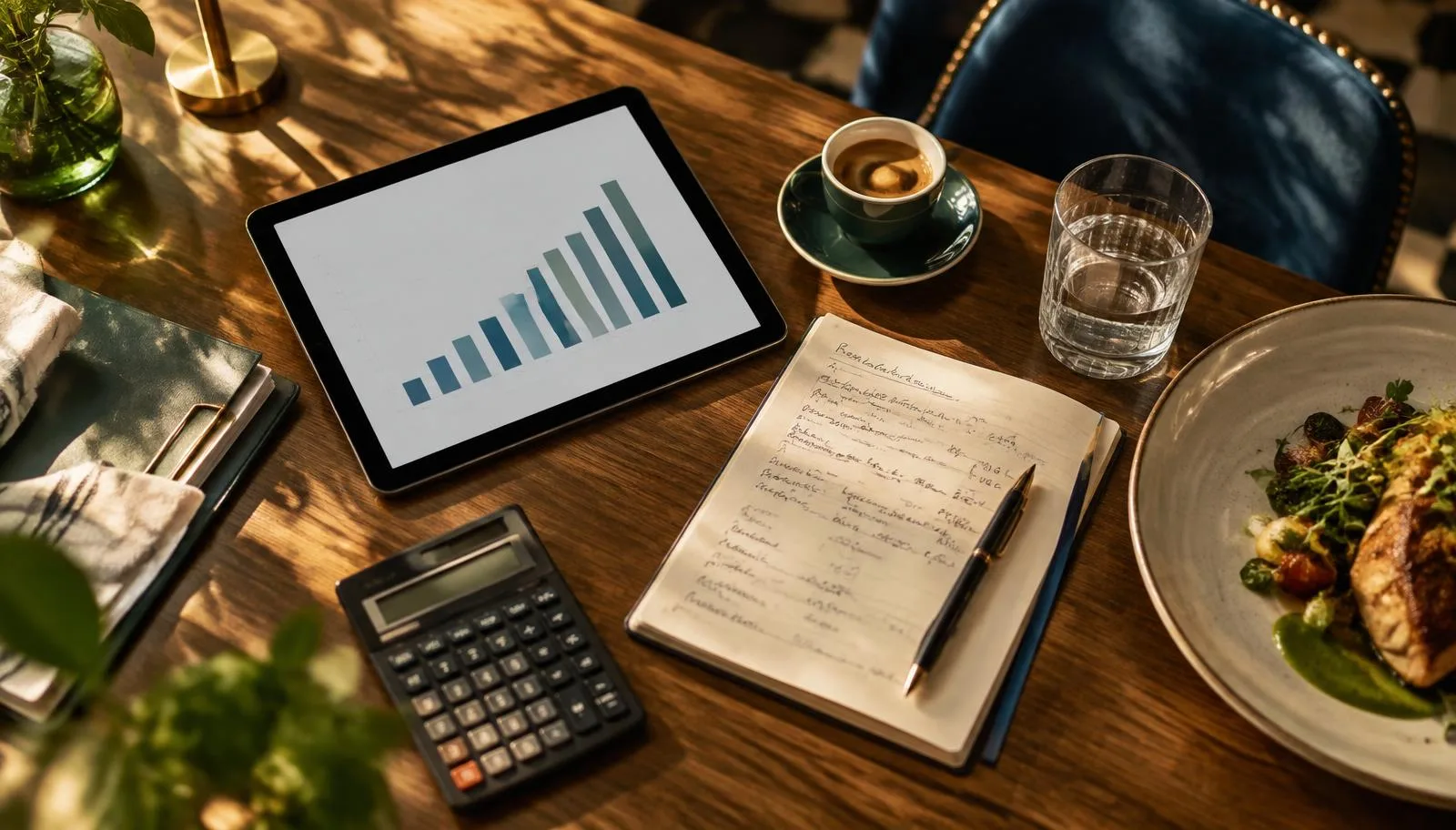
There is no single right restaurant marketing budget. The right amount depends on how many seats you need to fill, what a new guest is worth to you, and whether you're trying to hold steady or grow. You'll often see marketing agencies and software companies say restaurants spend roughly 3–6% of revenue on marketing, with new restaurants spending more. That's a rule of thumb that gets repeated a lot. It isn't a verified industry standard, and it says nothing about whether the money is working.
A better approach is to start with a specific goal, work out what a new guest is worth, check how much extra business your dining room and kitchen can actually handle, and then fund the channels most likely to reach that goal. This guide walks through that process, with examples.
What drives the number:
- Revenue and margins: what you can afford to invest without putting operations at risk
- Growth stage: a new opening, a steady neighborhood spot or an expansion
- Location and competition: how crowded your market is and how expensive it is to get attention there
- Existing customer base: how many past guests you can reach again by email, SMS or retargeting
- Average check and visit frequency: what a new guest is likely to be worth over time
- Capacity: how many extra covers you can serve well on the nights that need help
- Goal: awareness, reservations, delivery orders, private events or repeat visits
- Channels: some need ongoing ad spend; others mostly need time and good content
How Much Should a Restaurant Spend on Marketing?
Treat a percentage of revenue as a guardrail, not a formula. Your situation matters more than the number.
| Situation | How to think about the budget |
|---|---|
| Established restaurant, steady demand | Spend enough to protect your busy periods, fill known slow periods and keep past guests coming back. Email, SMS and retargeting usually matter more here. |
| New restaurant | Nobody knows you yet, so you'll usually need to spend more relative to revenue during launch, often for a set period, then scale back as people start coming back on their own. |
| Growing on purpose | Budget based on the number of extra covers you want and what it costs to get them. Revenue from last year is less relevant than your target. |
| Entering a new market or neighborhood | Assume you're starting from zero awareness in that area, even if your other locations are well known. |
Marketing budget vs. advertising budget
These terms often get mixed up, and the confusion leads to bad decisions.
- Your marketing budget is everything you spend to attract and keep guests: ad spend, photography and video, email and SMS platforms, website and landing-page work, promotions, tracking tools and any agency or staff time.
- Your advertising budget (ad spend) is only the money paid directly to platforms like Meta or Google to show your ads.
Ad spend is one line inside the marketing budget. When someone says "we spent $3,000 on marketing," it helps to ask how much of that actually reached Meta or Google, and how much went to fees, tools and creative.
What Should Be Included in a Restaurant Marketing Budget?
Not every restaurant needs every item below. A neighborhood spot with a loyal base may need very little paid advertising. A new destination concept may need a lot.
- Paid social (Meta: Facebook and Instagram): reaching nearby people who don't know you yet, and re-engaging people who have shown interest
- Google Ads: showing up when people are actively searching for a place to eat, book or celebrate
- Creative: photography, short-form video and ad design. Weak creative makes every other line less effective
- Email and SMS: bringing past guests back, which usually costs far less than finding new ones
- Website and landing pages: a fast, mobile-friendly path from ad to menu to reservation
- Retargeting: follow-up ads for people who visited your site, menu or reservation page but didn't book
- Promotions: offers, events, prix fixe menus or holiday packages, including the cost of any discount
- Tracking and analytics: Meta Pixel, Google tag, conversion setup and reporting, so you can tell what's working
- Management: an agency, freelancer or the hours your own team spends running all of this
Restaurant Marketing Budget Examples
These are hypothetical examples to show how goals shape budgets. They are not Mixtarget client results and are not predictions of what any restaurant will achieve.
Example 1: Small neighborhood restaurant
A 50-seat restaurant that's full on weekends but quiet Monday through Wednesday. The goal is more weeknight covers. A sensible plan focuses on a small, tightly targeted local ad budget promoting a specific weeknight reason to visit, plus a regular email or SMS message to past guests. There's no need for a big awareness campaign.
Example 2: Growing restaurant
A busy restaurant adding brunch service. The goal is to make brunch known quickly. The budget shifts toward fresh brunch photography and video, Meta campaigns aimed at nearby audiences for a few weeks, and retargeting people who view the brunch menu. Once brunch is getting steady repeat guests, spend can come down.
Example 3: High-volume restaurant
A large venue with a private dining room. The main dining room fills itself, but private events are underbooked. Here the marketing budget might go mainly to Google Ads for searches like "private dining" and "birthday dinner," a dedicated private events landing page with a simple inquiry form, and retargeting people who view that page.
Example 4: New restaurant launch
A new opening with no existing customer list. This is usually the period with the highest spend relative to revenue: pre-opening awareness, an email or SMS waitlist sign-up, launch creative and steady paid social through the first few months. The plan should include a date to review and scale back once repeat business starts to build.
Marketing Budget vs. Ad Spend: What's the Difference?
If you hire an agency, you'll typically pay two separate things:
- A management fee to the agency for strategy, setup, creative direction, optimization and reporting.
- Ad spend paid directly to Meta, Google or other platforms to show the ads.
For example, if a restaurant pays an agency $1,500 a month and puts $2,000 a month into ads, its total cost is $3,500, not $1,500. Make sure you know whether any quote you receive includes ad spend. It's also worth asking whether the ad accounts are in your name, so your data stays with you.
At Mixtarget, plans start at $995/month, and ad spend is always separate. It's paid to the platforms and never included in the monthly fee. You can see the details on our pricing page.
How Much Should a Restaurant Spend on Facebook and Instagram Ads?
There's no daily budget that works for every restaurant. These factors matter more than any rule of thumb:
- Market size and radius: a dense city neighborhood and a suburban town need very different reach. Most restaurants only need to reach people within a realistic travel distance.
- Capacity: spending more to drive demand you can't seat or serve well wastes money and can hurt reviews.
- Average check: a higher-check concept can justify a higher cost to get one new guest.
- Offer: a clear reason to visit now (a new menu, an event, a weeknight special) usually makes ads more efficient than general "come visit us" messaging.
- Campaign objective: reach, traffic and conversion campaigns behave differently, and Meta optimizes for the objective you choose.
- Creative: you'll need enough fresh photos and video to keep ads from getting stale.
- Retargeting: set aside part of the budget to follow up with people who visited your site or reservation page.
- Testing: budget enough for the platform to learn and for you to compare at least a couple of creative approaches before deciding what works.
For campaign setup, creative and retargeting, see our guide to Facebook ads for restaurants.
How Much Should a Restaurant Spend on Google Ads?
Google and Meta do different jobs. Meta puts your restaurant in front of people who weren't looking for it. Google Search reaches people who are already looking, with searches such as:
- "restaurants near me"
- "brunch near me"
- "private dining [your city]"
- "birthday restaurant"
- "restaurant reservations tonight"
- specific cuisine searches like "omakase" or "Italian restaurant downtown"
Because these people are already looking, Google can be very efficient for high-value occasions like private dining and events. The trade-off is that you can only reach as many people as are searching, and popular terms in busy markets can get expensive per click.
On Google, you set an average daily budget per campaign. Google may spend up to twice that on a busy day, but over a month you won't be charged more than about 30.4 times your daily budget, according to Google Ads Help.
Not every restaurant needs Google Ads. A strong, complete Google Business Profile with up-to-date hours, menu, photos and reservation link costs nothing, and for many neighborhood restaurants it matters more than paid search.
When Should a Restaurant Increase Its Marketing Budget?
Times when it often makes sense to spend more:
- A new opening or new location
- Predictable slow periods you want to fill
- Launching brunch, lunch or late-night service
- Holidays and seasonal moments (Valentine's Day, Mother's Day, New Year's Eve)
- Patio or outdoor dining season
- A new menu or chef
- A push for private dining or large parties
- Events, tastings and special dinners
- Expansion into a new market
But more spend isn't always the answer. If tracking is broken, the creative is weak, the offer is unclear, or the reservation path is clunky, a bigger budget mostly scales the waste. Fix those first, then increase spend.
Signs Your Restaurant Marketing Budget Is Being Wasted
- No tracking: you can't see what happened after someone clicked
- Boosting posts without a plan: boosting is quick, but it offers fewer controls than a campaign built in Ads Manager
- Targeting too broadly: showing ads to people who will never realistically visit
- Weak creative: dark photos, generic stock images or the same ad running for months
- No retargeting: interested visitors leave and are never reminded
- Poor landing pages: slow pages, PDF menus that are hard to read on a phone, or a buried booking button
- No clear reservation path: people have to hunt for how to book
- Measuring likes instead of outcomes: engagement is not the same as covers
- Running on autopilot: campaigns keep spending for months without anyone reviewing what's working
Not sure where your budget is leaking? A free marketing audit looks at your ads, tracking and booking path and shows where money is likely being lost.
How to Build a Restaurant Marketing Budget
- Start with a specific business goal. "More Tuesday covers," "book 10 more private events a quarter" or "a strong first 90 days" is something you can plan around. "More awareness" isn't.
- Work out what a guest is worth. Use your average check per guest and a realistic estimate of how often a new guest returns. This tells you what you can afford to spend to get one.
- Check your capacity. Know which days and times have room, and how many extra covers the kitchen and staff can handle well.
- Choose the channels that fit the goal. Use Meta to reach people nearby who haven't heard of you, Google for people who are already searching, and email or SMS to bring back past guests.
- Separate management costs from ad spend. Budget for both explicitly so there are no surprises.
- Set aside money for creative and testing. New photos and video, plus room to test different approaches.
- Measure the right things. Track landing-page views, reservation-page visits, bookings where you can track them, and changes in covers on the nights you targeted.
- Move money to what works. Review monthly. Cut what isn't contributing and put more into what is.
Restaurant Marketing Budget FAQ
How much should a small restaurant spend on marketing?
Start from a goal and what you can afford, not a percentage. Many small restaurants get the most value from a complete Google Business Profile, regular email or SMS to past guests and a modest, tightly local paid social budget focused on their slowest nights.
How much should a new restaurant spend on advertising?
New restaurants typically spend more relative to revenue during launch because nobody knows them yet. Plan a defined launch budget with a review date, and build an email or SMS list from day one so you're not paying to reach the same people forever.
Should restaurants advertise on Facebook or Google?
It depends on the goal. Meta (Facebook and Instagram) is better for reaching nearby people who aren't looking yet. Google Search is better for catching people who are actively searching, especially for occasions like private dining. Many restaurants use both for different jobs.
Is Instagram advertising worth it for restaurants?
It can be, especially for visual concepts, but Instagram ads run through the same Meta system as Facebook ads. In most cases you'll get better results managing them as one campaign and letting Meta show ads across placements, rather than treating Instagram as a separate budget.
Should marketing spend be based on restaurant revenue?
Revenue is a sensible check on what you can afford, but basing the budget only on last year's revenue can underfund growth and overfund maintenance. Base it on your goals, then check it against revenue.
How much should a restaurant spend on social media ads?
Enough to reach a meaningful share of the people within your realistic radius often enough for them to remember you, plus a retargeting budget, while staying within what your capacity can absorb. The right number depends on your market size, so test, measure and adjust.
Should restaurants hire a marketing agency?
Hire an agency if you don't have the time or skills in-house to plan, build, track and optimize campaigns, and if the agency is clear about what's included, keeps fees separate from ad spend and reports on business outcomes rather than likes.
The Bottom Line
A good restaurant marketing budget comes from your goals, not a percentage. Know what you're trying to achieve, what a guest is worth, how much you can actually seat, which channels match the goal, and how you'll measure the outcome. Keep management fees and ad spend separate in your plan, set aside money for creative, and review regularly.
If you'd like an outside view of how your current budget is being used, Mixtarget works with restaurants and hospitality businesses on paid social, Google Ads, retargeting and conversion strategy. A free audit is a straightforward way to see where you stand.
Related insights
Restaurant Marketing
Facebook Ads for Restaurants: How to Turn Clicks Into Reservations
Cheap clicks don't fill tables. Learn how to build Meta campaigns that take nearby diners from scrolling to booking, and how to tell whether they're working.
· 11 min read
Read article
Event Marketing
How Much Should You Spend Advertising an Event?
There's no universal event ad budget. Here's how to size yours from capacity, ticket economics, your existing audience and the time left to sell.
· 10 min read
Read article